
Super-LoRa: Making Long-Range IoT Faster and Smarter
Published:
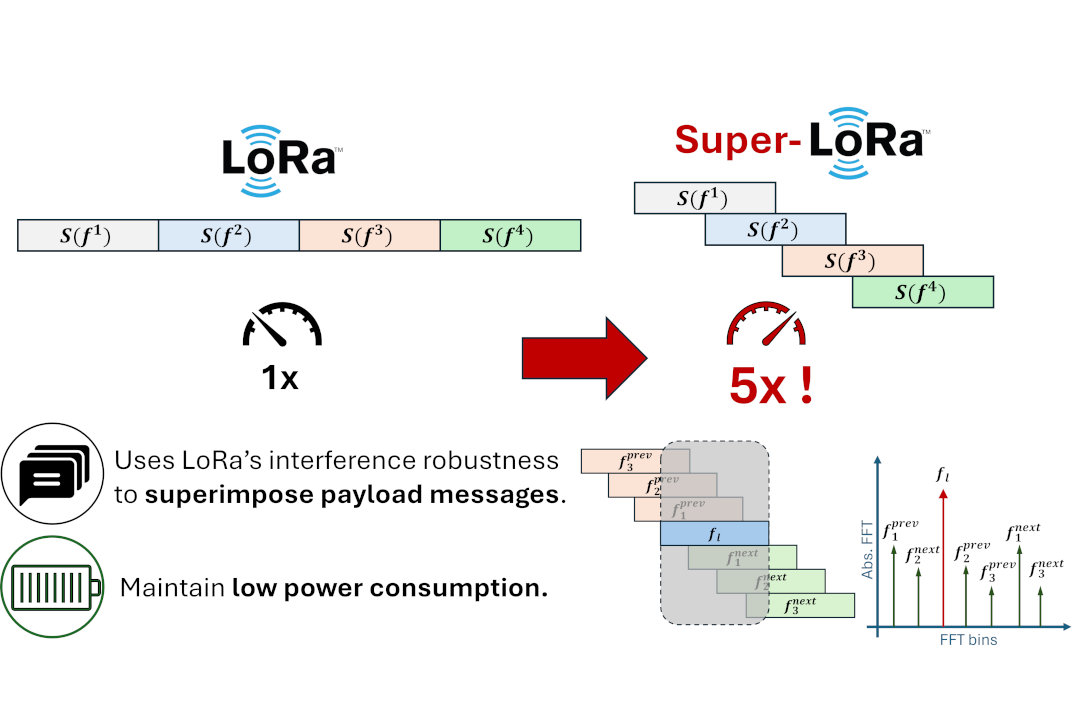
Super-LoRa is a research project where I set out to answer a simple question: can we make long-range, low-power IoT links much faster to support the emerging AIoT applications? This work led to a new way of transmitting data that can boost throughput by up to X5 times, while still working within the constraints of real IoT devices and regulations.
Quick links
- IEEE IoT Journal publication (featured): Read the paper
- Full idea slides (PDF): View slides
- 4MT winning talk: Watch the 4MT talk
- Winning announcement: KAUST CTL highlights the win
What Problem Does Super-LoRa Solve?
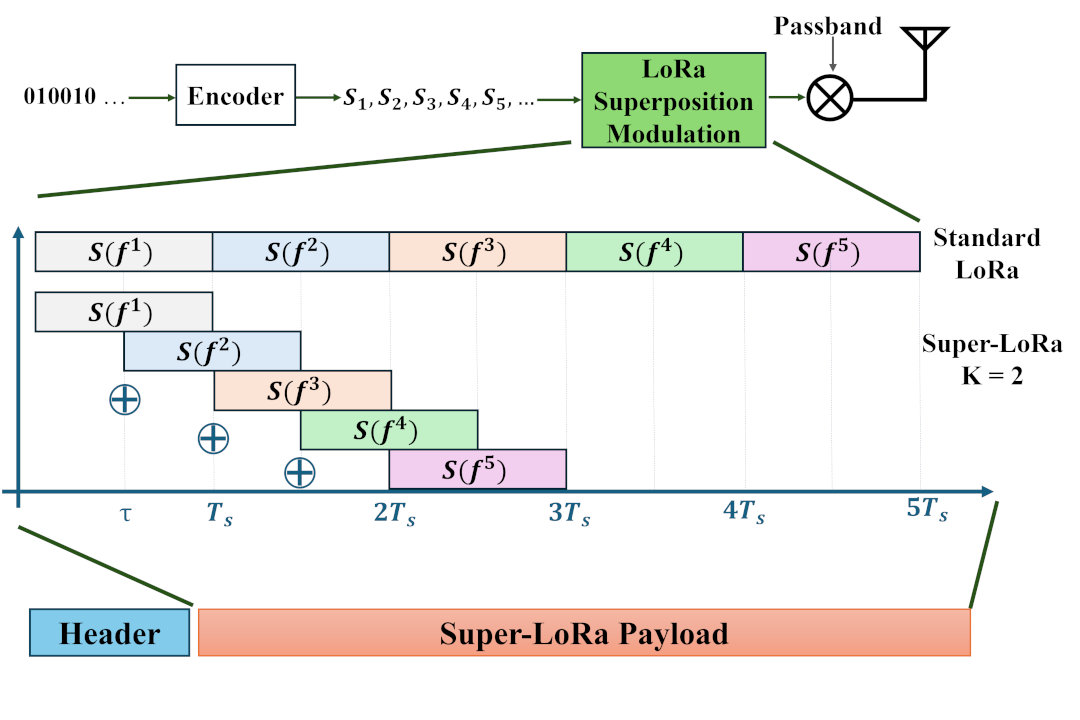
LoRa is one of the most widely used technologies for connecting low-power devices over long distances, especially in smart cities, agriculture, and environmental monitoring. It is excellent for sending small sensor readings, but it struggles when applications need to send larger bursts of data, such as images, dense measurements, or event logs.
Super-LoRa tackles this challenge by reshaping how we use each LoRa transmission. Instead of changing standards or requiring more powerful devices, the project shows how we can squeeze more useful data out of the same air-time, making LoRa links better suited for modern, data-hungry IoT applications.
Featured publication
This project resulted in a peer-reviewed article in the IEEE Internet of Things Journal, showing both the theory and real-world performance gains: Publication Link
What Is Super-LoRa in Simple Terms?
In standard LoRa, each “chirp” over the air carries one chunk of information. Super-LoRa finds a clever way to layer multiple pieces of information within that same time, without redesigning the entire system. In plain language:
- It reuses the same LoRa packet structure (preamble, header, CRC, etc.), so packets still look like normal LoRa packets to the network.
- It changes how the payload is arranged in time so that more information can be sent in less transmission time.
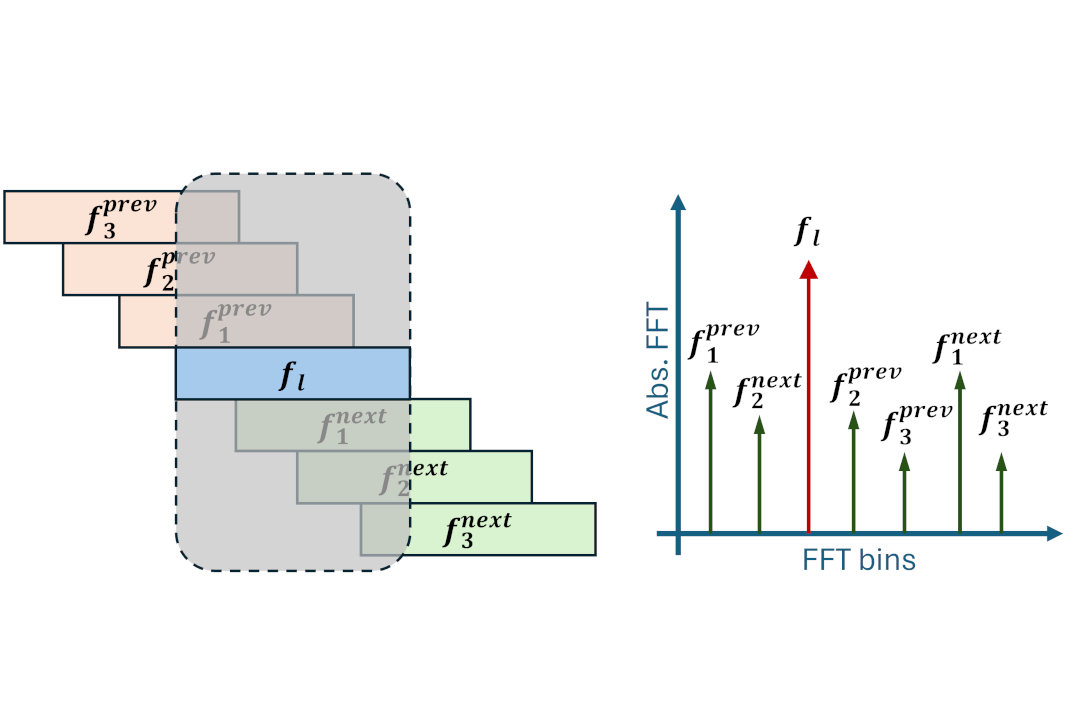
- It is designed so that the receiver can still recover the data reliably, even though the payload symbols are intentionally overlapped.
Full idea at a glance
For a fast, visual walkthrough, explore the slides here:
Turning the Idea into a Working System
A major goal of this project was to go far beyond theory and build a working prototype that runs on real radios. To do this, I:
- Implemented Super-LoRa using software-defined radios (SDRs), including:
- USRP N210 devices for flexible, high-performance experiments.
- ADALM‑PLUTO devices as a low-cost platform to demonstrate feasibility on affordable hardware.
- Integrated the design into an open-source LoRa physical-layer implementation in GNU Radio, extending existing blocks rather than building everything from scratch.
- Preserved the standard LoRa encoding and decoding chain, adding extra logic around how samples are buffered and combined, which kept the design clean and realistic for future adoption.
This hands-on work strengthened my skills in:
- SDR programming and waveform prototyping.
- Signal-chain debugging (from baseband processing to over-the-air issues).
- Working with open-source communication stacks and adapting them to new ideas.
Prototype & Experiments
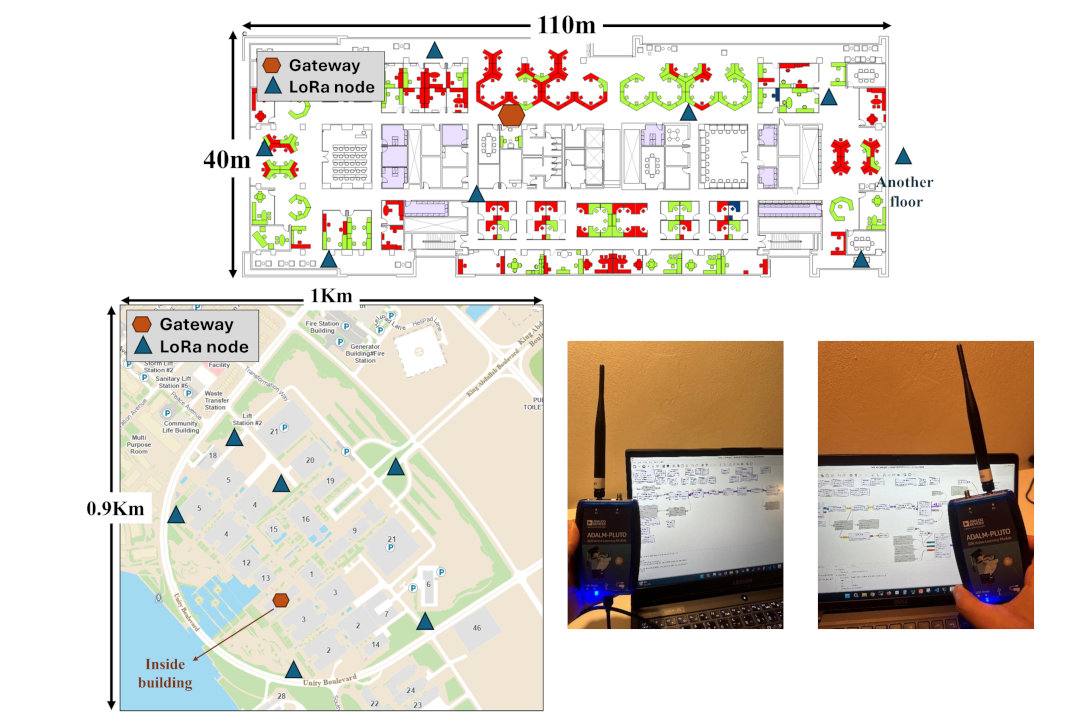
To prove that Super-LoRa works outside the lab, I ran an extensive experimental campaign across the KAUST campus. What I did:
- Deployed transmitters and receivers across both indoor and outdoor locations, covering line-of-sight and non-line-of-sight paths over roughly a 1 km × 0.9 km area.
- Collected transmission traces over a wide range of signal conditions, similar to what real IoT deployments experience.
- Measured how often packets were received correctly and how much useful data per second we could achieve for different configuration settings.
What we observed:
- Super-LoRa can significantly increase throughput (up to X5 times compared to standard LoRa) while still keeping error rates at levels that LoRa’s built-in error-correction mechanisms can handle.
- The gains are especially attractive in situations where the signal quality is already decent (for example, devices closer to a gateway), allowing these links to carry more data without consuming extra spectrum or power.
- The design remains flexible: when conditions worsen, it can “fall back” to behaving like standard LoRa.
These results confirm that Super-LoRa is not just an academic idea, but a practical enhancement for modern IoT systems.
What Is Novel About This Design?
The novelty of Super-LoRa lies in how it reinterprets interference as a resource:
- Instead of treating overlapping signals as a problem to be eliminated, Super-LoRa deliberately overlaps parts of the payload in a controlled way.
- The overlap is structured so that the receiver can still reliably separate and decode the information, without relying on heavy, power-hungry signal processing.
- The method stays compatible with the way LoRa operates today, making it a realistic path to higher data rates in future devices and networks.
This required combining insights from wireless communication theory with careful engineering choices to keep the design simple enough for real-world devices. From a personal development perspective, I gained experience in:
- Turning a theoretical insight into a full end-to-end system.
- Balancing ambitious performance targets with real constraints such as hardware limits and regulatory rules.
- Designing research that is both publishable and directly relevant to industry and real deployments.
Recognition at IEEE ICC 4MT Competition
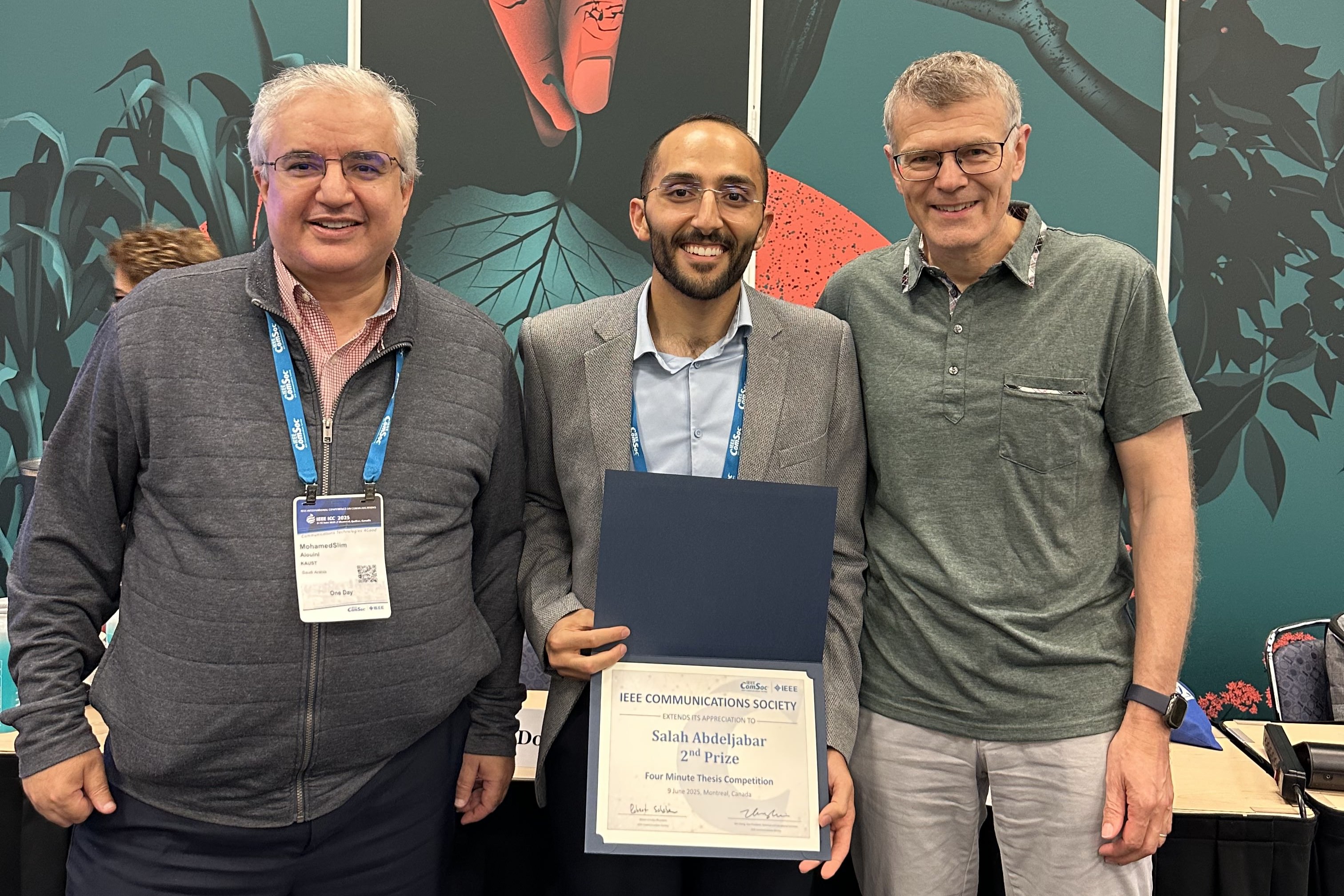
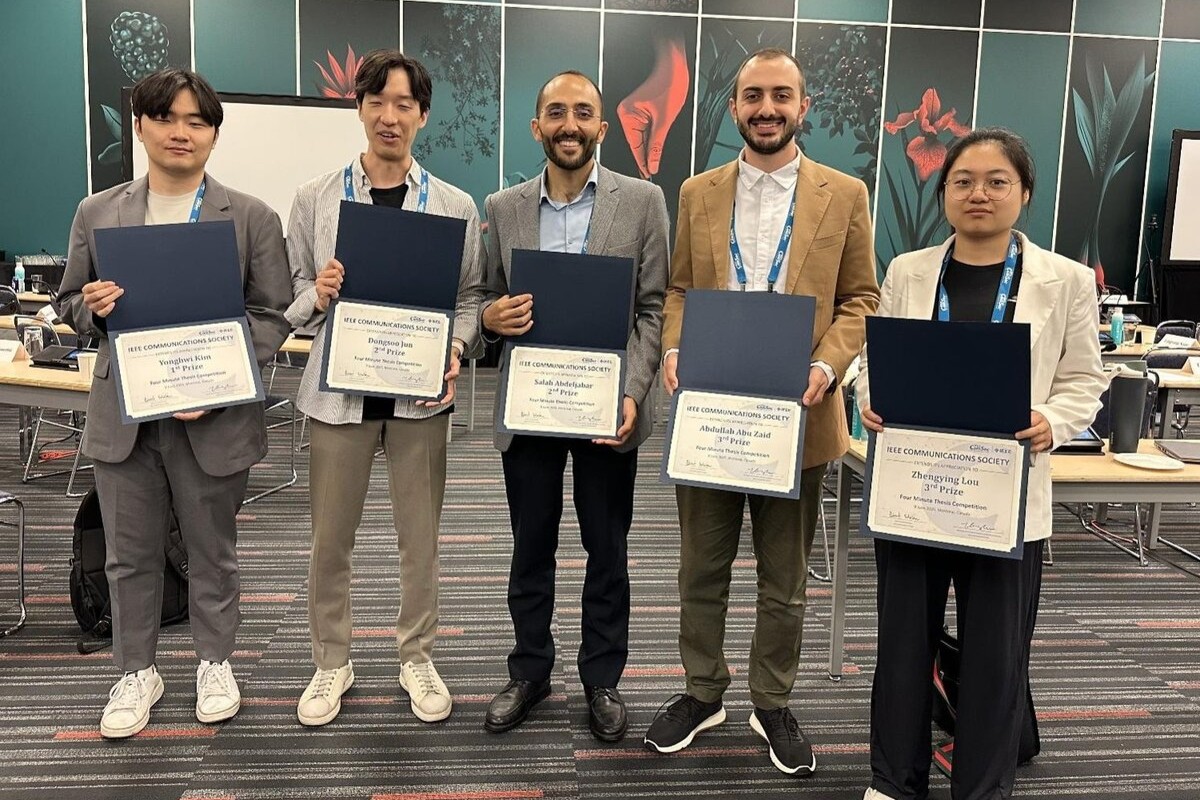
This project was recognized at the IEEE International Conference on Communications (ICC) Four Minute Thesis (4MT) Competition, where my presentation won second place.
The 4MT competition challenges PhD candidates to explain their research in just four minutes to a broad audience, focusing on clarity, impact, and storytelling. Preparing for and participating in this competition helped me sharpen key skills:
- Explaining advanced technical ideas in accessible, engaging language.
- Highlighting the real-world impact of research rather than only its mathematical details.
- Presenting confidently under time pressure to an international audience.
You can watch the presentation here:
- 4MT competition video: Watch the 4MT talk
- Announcement coverage: Announcement coverage
Why This Project Represents Me
Super-LoRa is a representative project for my profile because it combines:
- Innovation: proposing a new way to use existing LoRa technology to achieve much higher data rates.
- Practicality: building real prototypes, running campus-wide experiments, and working with actual hardware and channel conditions.
- Communication skills: distilling complex ideas into clear messages for both technical and non-technical audiences, as reflected in the 4MT recognition.
Photo Gallery